
Published: Tuesday, November 17, 2026
Annual Review 2026 - Cross Sectoral
Climate action cannot be a luxury only some households can afford, Climate Change Advisory Council warns.
- Budget 2027 carbon tax changes risk weakening the incentive to move away from fossil fuels thus exposing consumers to higher costs.
- Delays in delivering climate commitments and submitting required EU plans are undermining progress and access to vital funding.
Publishing the final chapter of its Annual Review 2026 today, the Climate Change Advisory Council is calling on Government to design and target climate incentives and supports around people’s circumstances, making the transition to cleaner sources of energy more affordable, accessible, and straightforward. The Council has warned that financial pressures, limited access to alternatives and the complexity of support schemes can prevent people from taking climate action, even when they are minded to do so. It says Government must do more to understand the barriers people face, including how to design incentives and communications accordingly, including through more joined-up supports for technologies such as solar panels, heat pumps and EVs.
Conflicting signals from government such as the increased fossil fuel subsidies and changes to the carbon tax further weaken the incentive to take action. Fossil fuels accounted for nearly 80% of Ireland’s energy requirements in 2025, significantly above the latest average figure for the EU, while fossil fuel subsidies amounted to €4.67 billion in 2024. The 2026 energy crisis arising from the war in Iran has again demonstrated the risks of this dependence, exposing Irish households and businesses to international price volatility.
The Council says reducing Ireland's dependence on fossil fuels requires consistent policies that encourage people to adopt cleaner alternatives. It warns that changes to carbon tax announced in Budget 2027 undermine the vital long term signal that is embedded in carbon taxation. It also increases the risk of Ireland losing its derogation from the EU's second Emissions Trading System (ETS2), potentially resulting in higher costs for consumers and businesses. The Council is urging the Government to return to its original carbon tax trajectory, reinforcing the message that Ireland is transitioning away from fossil fuels, while protecting the revenue needed to fund decarbonisation and support a fair transition.
EPA projections indicate that Ireland will not meet its second carbon budget. Ireland remains significantly off track to meet its National and EU 2030 climate commitments. The Review also highlights continued delays to the 2026 Climate Action Plan and carbon budget programme. Only 10 of the 74 delayed actions carried forward from Climate Action Plans 2023–2025 were completed in the first half of 2026, leaving 64 outstanding.
The Council warns that these delays are undermining long-term planning, investment certainty and Ireland's emissions reduction targets.
Ireland's failure to submit its Social Climate Plan is delaying access to €663 million in EU funding to support households and businesses with the costs of the energy transition. The Council is urging Government to immediately finalise the plan, ensuring that funding delivers additional, targeted supports to reduce energy poverty and help households move away from expensive fossil fuels.
In addition the Council has called for stronger planning and investment to prepare Ireland for the growing impacts of climate change. To safeguard lives, livelihoods and the economy, the Government should adopt a national reference warming trajectory to guide adaptation planning in Ireland and assess adaptation investment costs to inform a long-term adaptation finance strategy, that mobilises private and public funding.
Alex White, Chair of the Climate Change Advisory Council said:
“We cannot expect people to make the necessary critical changes without recognising the financial and practical barriers standing in their way. If the upfront costs are too high, or the supports too difficult to access, we are making climate action harder than it needs to be.
Government must design supports around how people actually live. We have evidence of people's willingness to act, but we need to translate that into policies that recognise their financial circumstances and practical barriers. Climate action must be achievable for ordinary households, not just those who can afford major investments.
Dependence on fossil fuels is not the affordable option. On the contrary, it is leaving households and businesses exposed to geopolitical events outside of their control. We must have political leadership to deliver on the climate commitments made that ensure consistent policies, smarter incentives and practical supports that we urgently need to achieve emissions reductions.”
ENDS
NOTES TO EDITOR:
- Research conducted by Ipsos B&A for the Just Transition Commission found that 64% of respondents regarded climate change as an immediate and urgent problem, while 42% identified affordability as the most important consideration in making climate action fair1.
- Ireland's derogation from the EU's second Emissions Trading System is conditional on its domestic carbon tax exceeding the ETS2 Auction price. Losing the derogation could increase costs for consumers and businesses.
- The EPA projects a 26.5% overshoot of the 2026–2030 carbon budget if additional planned measures are implemented, rising to 40.5% under existing measures alone.
- According to the SEAI “almost four-fifths (78.2%) of Ireland's energy requirement continued to be met through imports in 2025, substantially higher than the latest available EU average of 57.3%”.
The following figures are extracted from the report: 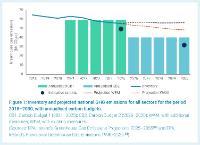
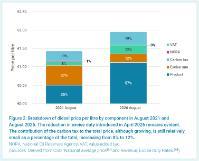
If you have any questions or are seeking further comment, please do not hesitate to contact: Mark Harrington (mark.h@springboardcommunications.ie or +353 86 128 3843)
The Climate Change Advisory Council published Sectoral Reviews throughout the year.
|
Chapter |
Published |
|
Our Changing Climate |
Published 1st April 2026 |
|
Electricity |
Published 13th May 2026 |
|
Transport |
Published 17th June 2026 |
|
Built Environment |
Published 29th July 2026 |
|
Agriculture, Forestry and Land Use (AFOLU) |
Published 9th September 2026 |
|
Preparing for Ireland’s Changing Climate |
Published 29th September 2026 |
|
Industry and Waste |
Published 14th October 2026 |
|
Biodiversity |
Published 4th November 2026 |
|
Cross Sectoral |
Published 17th November 2026 |
|
Irish Translation of Summary document |
Published 17th November 2026 |
Download this article as PDF